
Blooming
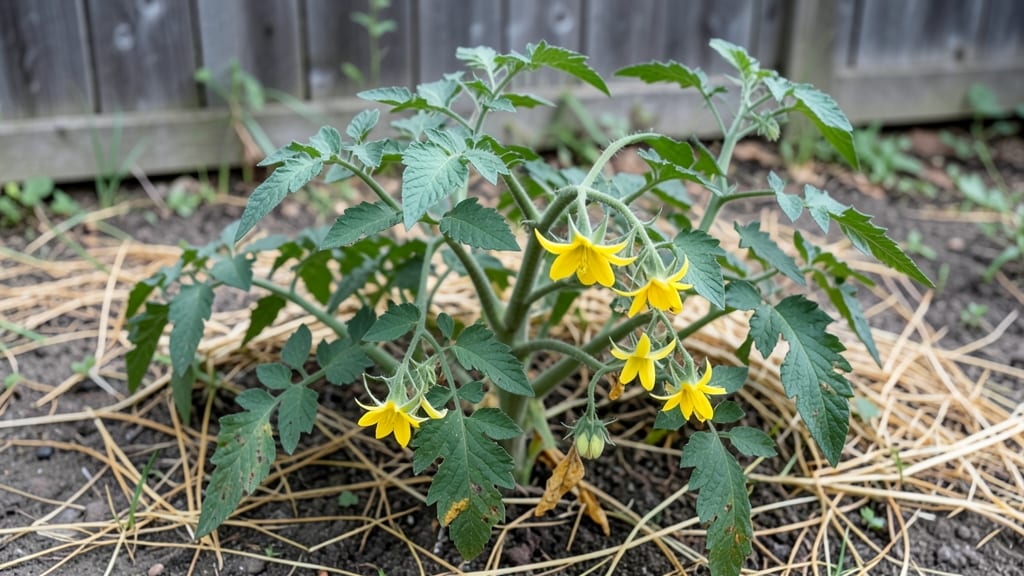
When tomato plants bloom early, it usually means they're thriving—but heat stress or inconsistent care can also trigger it. To maximize fruit production, trim side shoots, maintain even moisture, and fertilize with balanced nutrients to prevent flower drop.
Early blooming often happens when tomatoes experience long daylight hours or warm soil temperatures before their natural cycle. 🌿 Determinate varieties tend to flower sooner than indeterminate types, and some heirloom strains are genetically programmed to start early.
The key is monitoring plant health—too much nitrogen can cause lush foliage but fewer flowers, while calcium deficiencies lead to blossom end rot. I’ve found that hand-pollinating flowers with a small brush on humid days helps set more fruit when natural pollinators are scarce.
This phase is critical because premature flowers often struggle to develop fruit without proper support. Adjusting watering schedules (deep but infrequent) and adding Epsom salt (magnesium sulfate) can strengthen cell walls. Pruning suckers redirects energy to existing flowers, while shade cloth protects blossoms from afternoon heat waves.
Think of it like giving your plant a spa day—just the right balance of care makes all the difference.
💡 In This Article
- Environmental Triggers for Early Tomato Blooms
- Optimizing Fruit Set in Premature Tomato Flowers
Environmental triggers for early tomato blooms
Here's what's actually happening when tomato plants bloom early: daylight length and temperature create a perfect storm for triggering flowering.
Tomato plants are short-day sensitive, meaning they flower when daylight hours drop below 14-15 hours—but some varieties bloom early when exposed to consistent warmth (above 60°F) combined with 12-14 hours of sunlight.
This is why greenhouse tomatoes often flower prematurely—they experience artificial long days but controlled warmth that mimics spring conditions.
The science involves a hormone called florigen, which signals flowering when produced in response to these environmental cues.
Heat stress above 85°F can actually accelerate this process, but it also causes blossom drop because high temperatures disrupt pollen viability. 🌡️ Determinate varieties (like 'Roma' or 'Celebrity') tend to bloom earlier because their genetic programming prioritizes quick flowering and fruiting, while indeterminate types (like 'Sungold') focus on continuous growth.
The difference is like comparing a marathon runner to a sprinter—one goes for endurance, the other for speed.
Genetics play a huge role too. Heirloom varieties often bloom earlier because they've been selected for traditional growing seasons, while modern hybrids may delay flowering to match longer commercial growing periods. For example, 'Brandywine' typically flowers 2-3 weeks earlier than 'Better Boy' under identical conditions.
This genetic variation means your approach should match your variety—determinate plants need early pruning to support heavy fruit loads, while indeterminate types benefit from more aggressive training to maximize yield potential.
Daylight hours matter because tomatoes use them as a biological clock. When days shorten naturally (as in late summer), plants receive a signal to flower. But artificial lighting can trick them into blooming early—this is why growers use 12-hour light cycles in greenhouses to control flowering timing.
The key threshold is 12.5 hours of darkness, which triggers florigen production. Too much light (like 16+ hours) can delay flowering, while just-right conditions create that perfect bloom window.
Soil temperature is equally critical. Roots need to stay above 65°F for optimal nutrient uptake, which fuels early flowering. Cold soil (50°F) stunts growth, while heat above 90°F causes stress responses that can lead to premature blooming.
Think of it like a car engine—too cold and it won't start, too hot and it misfires. The sweet spot is 70-80°F, where roots and shoots work in harmony to produce those first delicate blossoms.
What most people don't realize is that even slight variations in these factors can dramatically affect flowering. For instance, a 5°F temperature swing between day and night can trigger earlier blooming in some varieties, while consistent warmth may delay it.
This is why gardeners in hot climates often see early blooms that fail to set fruit—heat stress disrupts the delicate balance between flowering and fruit development. 💫 The solution? Monitor your plants closely and adjust care based on their specific needs rather than following generic advice.