
Pruning
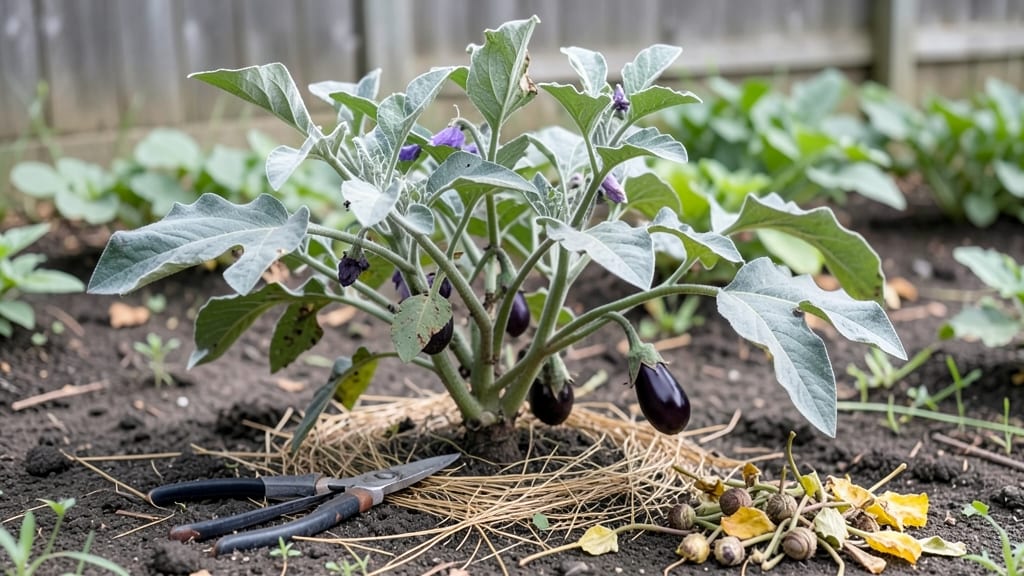
Trimming eggplant plants might sound intimidating, but three well-placed cuts can double your harvest. ✂️ I learned this the hard way after my first overgrown bush produced just two small fruits—now I prune strategically to keep plants productive all season.
The key is timing and knowing exactly where to cut without stressing the plant.
You’ll need sharp pruning shears, a sunny morning, and about 15 minutes. The first cut removes any suckers (those little shoots growing between the main stem and branches) when they’re still small—this redirects energy to fruit production.
Next, trim any yellow or diseased leaves immediately to prevent spread. Finally, prune back leggy growth to encourage bushier, more productive plants.
What you’ll get is a plant that keeps producing purple globes instead of putting all its energy into vines. Airflow improves, reducing disease risk, and the remaining branches become stronger, yielding more fruit. By late summer, your plant will look like a compact, thriving machine instead of a tangled mess.
This method works for both container-grown and in-ground eggplants, though larger varieties may need slightly more aggressive pruning. The biggest mistake? Waiting until flowers appear to prune—do it early and often for the best results. Ready to transform your eggplant game?
📚 In This Guide
- What you need
- Instructions
- Tips and common mistakes
- Wrapping up and next steps
What you need
- ● Sharp bypass pruners – Choose sterilized, high-quality pruners (e.g., Felco or Fiskars) to make clean cuts and avoid damaging the plant.
- ● Hand pruners or shears – For smaller branches or leaves (e.g., Corona or Gonicc).
- ● Garden gloves – Heavy-duty, cut-resistant gloves (e.g., Mechanix or Felco) to protect your hands from thorns and sharp edges.
- ● Disinfectant solution – Mix 1 part bleach (5.25% sodium hypochlorite) with 9 parts water to sterilize tools between cuts and prevent disease spread.
- ● Compost bin or mulch – A container to collect pruned leaves and small branches for composting.
- ○ Pruning sealant (optional but helpful) – A fast-drying sealant (like Tree Seal Tape) to cover larger cuts and prevent infection.
- ● Loppers – For thicker branches (if your eggplant plant grows unusually large).
- ● Hose with spray nozzle – To rinse tools and clean cuts post-pruning.
- ● Plant growth regulator (e.g., paclobutrazol) – Helps manage excessive growth if your eggplant gets overly leggy.
- ● Labeling tags – If you’re experimenting with different pruning techniques, label plants to track results.
Step-by-Step guide to trimming eggplant plants for bountiful harvests
Keep your eggplants producing all season with these simple pruning techniques—no fancy tools needed.
✂️ Step 1: Prune Suckers for Stronger Growth
Eggplants grow best when you remove the small shoots (suckers) that form in the leaf axils—the spots where leaves meet the stem. These suckers drain energy from fruit production. Use clean pruning shears or your fingers to pinch them off when they're about 2 inches long. Start this process when your plants are 12-18 inches tall and repeat every 2-3 weeks throughout the growing season.
Here's the thing—you want to keep the plant's energy focused on the main stem and existing fruit. If you skip this, you'll end up with small, bitter eggplants and leggy plants that flop over. I always prune on a dry morning so the cuts dry quickly and reduce disease risk.
✂️ Step 2: Trim Lower Leaves for Airflow
When your eggplant plant reaches 24 inches tall, start removing the largest leaves from the bottom 6 inches of the stem. This improves airflow and reduces humidity around the soil, which prevents fungal diseases like powdery mildew. Aim to remove about 10-15% of the total leaves in this first round, then repeat every 4-6 weeks.
Don't go overboard—you're not defoliating the plant, just creating space. I like to remove leaves that are touching the soil or blocking sunlight from reaching the lower fruit. You'll see healthier, glossier leaves after this trim, and your eggplants will grow larger and more evenly.
✂️ Step 3: Cut Back Overly Long Branches
As your eggplant plant grows taller, some branches may become too long or leggy. When you see branches exceeding 12 inches beyond the main stem, cut them back to 6-8 inches from the main stem. This encourages bushier growth and more flowering sites. Do this pruning in late afternoon to give the plant time to recover overnight.
Real talk: this step is about balance. If you cut too much, you'll reduce fruit production. If you cut too little, the plant becomes top-heavy and may fall over. I usually do this toward the end of summer when the plant has already set several fruit. The goal is to keep the plant compact and productive.
🌿 Step 4: Remove Damaged or Diseased Growth
Throughout the season, keep an eye out for leaves with holes, yellowing, or signs of disease. Remove these immediately using clean pruning shears, cutting back to healthy tissue. Also trim any fruit that's misshapen, cracked, or showing signs of pest damage. This prevents the spread of disease and encourages the plant to focus energy on healthy growth.
I always sterilize my pruners with rubbing alcohol between cuts to prevent spreading any potential pathogens. You'll know you're doing it right when your plant looks more vibrant and starts producing new, healthy leaves within a few days of pruning.
⏰ Step 5: Time Your Final Pruning for Late Season
About 6-8 weeks before your first frost date, give your eggplant plant one last light pruning. Remove any remaining suckers and trim back any overly long branches to 6 inches from the main stem. This helps the plant harden off and redirect energy to ripening existing fruit. Stop all pruning 4 weeks before frost to allow time for new growth to mature.
This final trim is all about preparing the plant for the end of the season. You'll see the remaining fruit swell and ripen more quickly after this last pruning. It's a great way to extend your harvest into fall and make the most of your growing season.
Tips & tricks for perfect eggplant plant pruning
These simple strategies will help you maintain healthy, productive eggplant plants all season long without the guesswork.
Timing is Everything: I've found that pruning in the morning—when the plants are dry and dew-free—makes all the difference. The cuts heal faster and you're less likely to introduce fungal spores through wet foliage. For Step 1, when your plants reach 12-18 inches, I recommend doing this first pruning on a clear morning after the dew has evaporated. This gives your plants the best start to recover.
Tool Selection Matters: While you can pinch suckers with your fingers, I always keep a pair of sharp, clean pruning shears handy for larger cuts. For Step 3, when cutting back overly long branches, I use shears to make clean cuts at the 6-8 inch mark from the main stem. Dull shears can crush stems and invite disease, so I sharpen mine every few uses or replace them when needed. Sterilizing with rubbing alcohol between cuts (as mentioned in Step 4) is a game-changer for preventing infections.
Visual Cues for Pruning: When deciding which leaves to trim in Step 2, look for leaves that are touching the soil or casting too much shade on lower fruit. I like to remove about 10-15% of the total leaves in the first round—you'll know you're doing it right when you can see sunlight reaching the lower stems and soil. This airflow improvement is what prevents those nasty fungal diseases that can ruin your harvest.
Late Season Strategy: For the final pruning in Step 5, I mark my calendar 6-8 weeks before the first frost date. This gives me plenty of time to prepare the plant while still allowing 4 weeks for new growth to mature before cold weather arrives. I always do this light pruning in late afternoon when temperatures are cooler, giving the plant time to recover overnight before potential cold snaps.
Pro Tips for Trim Eggplant Plant
- These simple strategies will help you maintain healthy, productive eggplant plants all season long without the guesswork.
- Timing is Everything: I've found that pruning in the morning—when the plants are dry and dew-free—makes all the difference.
- Tool Selection Matters: While you can pinch suckers with your fingers, I always keep a pair of sharp, clean pruning shears handy for larger cuts.
Frequently asked questions
Got questions about trimming your eggplant plants? You’re not alone! Here are answers to the most common concerns—so you can keep those vines thriving and productive all season.
When is the best time to trim eggplant plants?
Trim eggplant plants in early spring (before flowering) and again after harvest to encourage new growth. Avoid heavy pruning during fruit development—focus on removing yellow leaves, dead branches, or excessive foliage that blocks sunlight. Light trims every 4–6 weeks keep plants balanced.
How much can I cut back without harming the plant?
Never remove more than 1/3 of the plant’s foliage at once. For eggplants, aim to trim only dead, diseased, or overcrowded branches. Cut just above a leaf node (where new growth emerges) to prevent stress. Pro tip: If your plant looks leggy, prune back to the first healthy set of leaves to spur bushier growth.
Will trimming reduce my eggplant harvest?
Not if done right! Pruning increases airflow, reducing fungal diseases (like powdery mildew) and directing energy to fruit production. However, avoid over-trimming during peak harvest—focus on removing only non-productive growth. Healthy plants with good airflow yield more consistently than overgrown ones.
Can I use pruned eggplant branches for anything?
Compost them
to return nutrients to the soil, or use as mulch around the base of your plant. If branches are disease-free, you can even root cuttings in water (though eggplants root less eagerly than herbs). Just avoid using branches from plants with blight or pests—dispose of those in the trash.
My eggplant leaves are yellow after trimming—what’s wrong?
Yellow leaves after pruning are usually normal if they’re old or damaged. But if new growth turns yellow, check for:
Trim only healthy leaves to avoid stressing the plant further.
Wrapping up and next steps
Trimming your eggplant plants isn’t just about keeping them tidy—it’s the secret to bountiful harvests and thriving vines all season long! 🌿 With just three strategic cuts, you’ll encourage stronger growth, better airflow, and more delicious fruit.
Whether you’re a beginner or a seasoned gardener, these techniques are easy to master and make a world of difference.
Now that you’re armed with the know-how, grab those pruners and give your eggplants the care they deserve! Start with the first trim this week, and watch your plants flourish. Happy gardening—your future meals (and neighbors!) will thank you. 🍆✨